
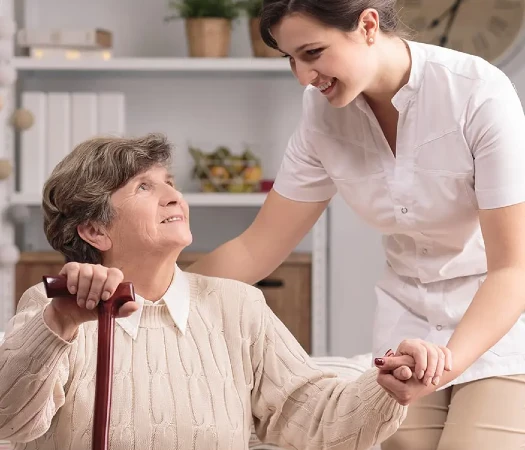
Alzheimer’s disease is a challenging and often heartbreaking condition that affects millions of people around the world. In this interaction, we will explore the topic of in-home Alzheimer’s care, focusing on how it can provide a more comfortable and familiar environment for those living with the disease. Additionally, we will discuss the personalised support and flexibility that in-home care services can offer, catering to the unique needs of individuals and providing a sense of continuity and security in their daily lives.
Understanding Alzheimer’s Disease
Before delving into the specifics of in-home care, it is essential to have a basic understanding of Alzheimer’s disease. Alzheimer’s is a progressive neurological disorder that primarily affects memory, thinking, and behaviour. It is the most common cause of dementia in older adults, and it can be incredibly challenging for both patients and their families. Recognising the unique needs and complexities of Alzheimer’s is fundamental in tailoring effective in-home care strategies that provide not only physical assistance but also the emotional support required for those navigating this difficult journey.
The Benefits of In-Home Alzheimer’s Care
One of the primary advantages of in-home care for Alzheimer’s patients is that it allows them to remain in a familiar environment. This can help reduce confusion and anxiety, as the individual is surrounded by their own belongings and memories. In-home care offers a highly personalised approach to Alzheimer’s care. Caregivers can tailor their support to the specific needs and preferences of each patient. This level of personalisation can be challenging to achieve in a residential facility.
Understandably, maintaining a sense of independence and dignity is crucial for individuals with Alzheimer’s disease. In-home care can empower patients to engage in daily activities to the best of their abilities while still receiving necessary assistance. In-home care allows family members to remain closely involved in the care of their loved ones. This can provide emotional support and strengthen the bond between the patient and their family.
Components of Effective In-Home Alzheimer’s Care
- Caregiver Training; Choosing the right caregiver is crucial. Caregivers should receive specialised training in Alzheimer’s care, including understanding the disease’s progression, communication techniques, and strategies for managing challenging behaviours.
- Personalised Care Plan; Each Alzheimer’s patient is unique, and their care plan should reflect that. A personalised care plan should address the individual’s specific needs, routines, and preferences.
- Safety Measures; Ensuring the safety of Alzheimer’s patients is paramount. In-home caregivers should implement safety measures such as removing potential hazards and providing supervision as needed.
- Cognitive Stimulation; Engaging in mentally stimulating activities can help slow cognitive decline in Alzheimer’s patients. Caregivers should incorporate activities that challenge memory and cognitive function.
- Emotional Support; Alzheimer’s can be emotionally taxing for both the patient and their family. Caregivers should provide emotional support and create a positive and reassuring environment.
- Regular Assessment; The progression of Alzheimer’s is unpredictable. Regular assessments by healthcare professionals can help adjust the care plan as needed to provide the best possible care.
Making Alzheimer’s Care More Personal
In-home Alzheimer’s care offers a compassionate and effective solution for individuals living with this challenging disease. It allows patients to remain in a familiar environment while receiving personalised care tailored to their unique needs. By understanding the benefits, considerations, and key strategies, families and carers can provide the best possible care to their loved ones while preserving their dignity and quality of life.
Remember, caring for someone with Alzheimer’s can be emotionally and physically demanding. It is essential to seek support, both from healthcare professionals and within your community, to ensure the wellbeing of both the caregiver and the person with Alzheimer’s.
So, if you are interested in learning more about in-home Alzheimer’s care, then we encourage you to visit the Companions Of London website or reach out to our professionals directly. This can be done by giving us a call on 020 7483 0212, by emailing us at info@companionsoflondon.co.uk or by filling in the relevant information into our online contact form and one of our experts will get back to you with the answers to your questions.
Should you decide that in-home Alzeimer’s care is the most suitable solution for your loved one, then a member of our dedicated team will be more than happy to discuss your loved one’s requirements, as well as secure suitable in-home Alzheimer’s care as and when it is most convenient for you and your loved one.